Who Are the Best Gearbox Motor Manufacturers in China?

Time:2026-11-05 Author:Sienna
0%

Choosing the best Gearbox Motor manufacturer in China takes more than comparing prices or catalog specifications. A unit may look suitable on paper, yet perform poorly when exposed to frequent starts, dust, heat, or changing loads. Buyers should examine torque and speed requirements, gear type, motor efficiency, materials, noise limits, and expected service life. Ask for test records, product traceability, and clear warranty terms. Small details matter.

Industry reports help frame the decision, but they do not replace factory-level checks. Grand View Research’s Industrial Gearbox Market Size, Share & Trends Analysis Report tracks demand across industrial applications, while Fortune Business Insights’ gearbox market coverage discusses market growth and technology trends. Their market boundaries and estimates can differ, so figures should be compared cautiously rather than treated as direct rankings of manufacturers. That distinction is easy to miss.

This guide looks at Chinese manufacturers through practical criteria: product range, engineering support, quality-control evidence, customization, delivery capability, and after-sales service. It also considers whether a supplier can explain its design choices, not just provide a polished brochure. A factory visit, sample inspection, or documented load test can reveal useful details, such as bearing finish, housing quality, and label consistency. No single checklist guarantees a reliable purchase. The right choice depends on the application, and buyers should verify claims against their own operating conditions.
Who Are the Best Gearbox Motor Manufacturers in China?

What Is a Gearbox Motor and Where Is It Used?

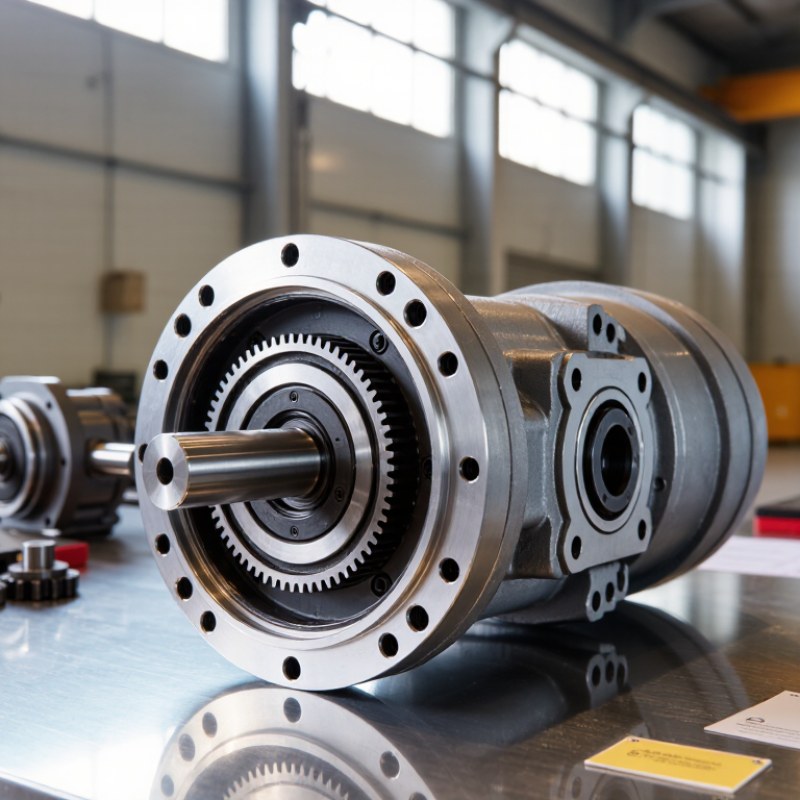
A gearbox motor, often called a gearmotor, combines an electric motor with a gearbox in one drive unit. The motor supplies rotation; the gears reduce output speed and increase torque. That makes controlled movement easier in compact equipment. A conveyor may need steady, slow pulling force, while a mixer may need enough torque to move thick material. The right unit depends on load, speed, duty cycle, mounting position, and operating environment. Small details matter.

Gearmotors appear in conveyors, packaging lines, material-handling systems, mixers, and some pump applications. The U.S. Department of Energy’s 2014 report, Improving Motor and Drive System Performance, notes that motor-driven systems account for about 70% of U.S. industrial electricity use. That figure covers motor systems broadly, not gearmotors alone. It still shows why efficient selection and maintenance deserve attention. A mismatched gear ratio can waste energy or strain components. A nameplate cannot tell the whole story; real load patterns should be checked, and I would be cautious about choosing from catalog torque alone. Shortcuts can be costly.

How Are Gearbox Motor Manufacturers Evaluated?

Evaluating a gearbox motor manufacturer starts with operating conditions, not a polished catalog. Record the required torque, speed, duty cycle, mounting position, ambient temperature, and expected starts per hour. Compare these needs with rated output and service factor. A unit that looks adequate at nominal load may run hot under frequent reversals. Ask for efficiency data, noise levels, thermal limits, and test methods. Numbers matter. So does the evidence behind them. Review drawings, material specifications, inspection records, and sample test reports. Check that the values refer to the same model and configuration. A capable supplier should explain deviations clearly.

Assess manufacturing control and after-sales support alongside performance. Look for documented checks on gears, shafts, bearings, winding insulation, and final assembly. Request a traceable test record for a representative motor, including current, temperature rise, vibration, and sound measurements where relevant. Verify spare-part availability, lead times, warranty scope, and response procedures before ordering. Small details count. Ask how backlash is measured and which tolerance applies. Compare technically equivalent quotations, not just headline prices. One limitation deserves attention: sample tests cannot predict every installation, and suppliers may test under different conditions. Keep questions in writing. Treat unclear answers as a risk to resolve, not a minor paperwork issue.

Who Are the Best Gearbox Motor Manufacturers in China?

How Are Gearbox Motor Manufacturers Evaluated?

Motor efficiency is one useful, standards-based comparison point when evaluating gearmotor suppliers. The chart shows IEC efficiency class minimums for a 0.75 kW, four-pole motor operating at 50 Hz. These figures describe the motor, not the complete gearmotor; gearbox efficiency, rated torque, service factor, thermal capacity, sealing, and documented quality controls should also be assessed.

Source: IEC 60034-30-1:2014. Values shown are minimum motor efficiencies for the stated rating.

Which Chinese Manufacturers Are Recognized in the Industry?

Industry recognition in China’s gearmotor sector is better judged by verified performance than by advertising claims.

The International Federation of Robotics’ World Robotics 2024 report records 276,288 industrial robots installed in China during 2023, representing 51% of global installations.

This is not a gearbox-motor ranking, but it reflects the scale of the automation market demanding dependable drives. Manufacturers serving this market are often evaluated on repeat orders, application records, export experience, and documented quality systems.

Look for test data that matches the intended duty: rated torque, backlash, thermal rise, noise, and operating life under load. A compact gearmotor may run quietly on a test bench yet overheat beside a conveyor after hours of continuous duty. Ask for load curves and traceable inspection records, not only peak-torque figures.

Numbers can mislead. Recognition also depends on engineering support, spare-part availability, and how clearly a supplier explains limitations. Public rankings rarely capture these details, so buyer audits and field references remain important evidence when comparing Chinese manufacturers.

How Do Leading Manufacturers Differ in Products and Capabilities?

Leading gearbox motor manufacturers in China differ less by catalog size than by how well they match torque, speed, and operating conditions. Some focus on compact helical or planetary units for conveyors and packaging lines. Others offer worm drives, heavy-duty gearboxes, or integrated motors for mixers and lifting equipment. Useful comparisons include rated torque, service factor, thermal limits, noise, sealing, and available mounting positions—not just motor power.

Efficiency and testing matter. The International Energy Agency’s 2011 report, Energy-Efficiency Policy Opportunities for Electric Motor-Driven Systems, estimated that motor-driven systems consume about 45% of global electricity. That figure makes efficiency more than a brochure feature. Ask manufacturers for measured efficiency data, test conditions, and applicable IEC motor-efficiency classifications. Also check whether gear ratings follow recognized calculation methods, such as ISO 6336 for cylindrical gears. Small details count.

Engineering support is another dividing line. Strong suppliers can review load cycles, starts per hour, ambient temperature, and shaft loads before recommending a unit. They should explain material choices, heat treatment, lubrication, and inspection records in plain terms. Catalog figures look tidy; real duty cycles are messier. A supplier’s sample test report can reveal more than a polished product page, though one report does not prove every production unit is identical. Look for documented quality controls and clear responses to application questions.

Who Are the Best Gearbox Motor Manufacturers in China? How Do Leading Manufacturers Differ in Products and Capabilities?

Manufacturer Profile Typical Products Common Reduction Ratios Typical Strengths Common Applications What Buyers Should Verify
Precision motion specialist Planetary gearboxes and geared motors, often with servo-motor interfaces Often approximately 3:1–100:1, depending on the number of stages and product series Compact design, high torque density, and low-backlash options for controlled motion Robotics, CNC equipment, packaging machinery, and automated production lines Backlash test conditions, rated and peak torque, torsional rigidity, and compatibility with the specified servo motor
General-purpose geared-motor producer Helical, parallel-shaft, and shaft-mounted geared motors Varies by design; multi-stage configurations offer a wider ratio range than a single stage Broad model selection, multiple mounting arrangements, and suitability for continuous-duty machinery Conveyors, material-handling systems, mixers, and general industrial equipment Service factor, duty cycle, thermal limits, mounting position, shaft loads, and motor protection rating
Worm-gear specialist Worm reducers and worm-geared motors, including right-angle configurations Commonly available in ratios such as approximately 5:1–100:1, subject to the series Right-angle drive arrangement and compact packaging; some designs can resist back-driving under specified conditions Small conveyors, lifts, gates, packaging machinery, and space-constrained drives Efficiency, heat dissipation, lubrication, allowable input speed, and whether self-locking is actually specified and tested
Heavy-duty industrial gearbox builder Large helical, bevel-helical, and parallel-shaft gear units Depends on configuration; multi-stage units can cover a broad range of reduction ratios Designed for higher torque and demanding operating conditions, with options for application-specific layouts Mining, cement, steel, bulk material handling, and other heavy industrial processes Documented load ratings, bearing life assumptions, cooling method, materials, quality records, and service support
Custom-engineering and OEM-focused producer Modified standard gearboxes or application-specific geared-motor assemblies Selected to match the required speed and torque; available range depends on the design Customization of interfaces, dimensions, mounting, motor combinations, and production batches OEM machinery, specialized production lines, and equipment with non-standard interfaces Approved drawings, prototype testing, change control, traceability, minimum order quantities, and delivery capacity

These are general manufacturer profiles, not a ranking of individual companies. Ratio ranges are indicative examples only; actual specifications vary by model, stage count, motor, and operating conditions. Compare suppliers using verified datasheets, test records, application references, and after-sales coverage.

How Can Buyers Choose the Right Chinese Gearbox Motor Supplier?

Choosing a Chinese gearbox motor supplier starts with the machine, not the catalog. Define required torque, speed, reduction ratio, duty cycle, mounting position, and available space. A conveyor running eight hours daily needs different thermal capacity from a gate that moves occasionally. Write down the real load, including startup peaks. Numbers need context.

Ask how the supplier verifies performance. Request drawings, material details, test records, and a sample unit when practical. Compare noise, temperature rise, vibration, and output speed under conditions close to your own application. Ask for evidence. A polished datasheet is useful, but it cannot show how a unit behaves after hours under load. Check whether the supplier can explain its test setup and provide consistent answers.

Also inspect communication and service arrangements. Confirm production lead time, spare-part availability, warranty scope, and who handles technical questions after delivery. A brief factory video or remote walkthrough may clarify assembly and inspection steps, though it is not a substitute for independent checks on important orders. I would not choose on price alone; I have seen low quotes leave mounting changes or shipping costs unclear. That matters. Share your operating conditions in writing, then compare suppliers against the same requirements.

FAQS

What information should buyers prepare before comparing gearbox motors?

Record torque, speed, duty cycle, mounting position, ambient temperature, and starts per hour. Include startup peaks. Details matter.

Why can a motor that meets rated load still overheat?

Frequent reversals, long operating hours, or high ambient temperatures can increase heat. A conveyor running eight hours daily needs careful thermal checks.

What test records should buyers request?

Ask for measurements of current, temperature rise, vibration, and noise where relevant. Check that the report matches the exact model and configuration.

How can buyers compare different gearbox designs?

Compare torque, reduction ratio, service factor, mounting options, sealing, and noise. Catalog size alone says little.

What should buyers ask about gear and motor efficiency?

Request measured efficiency data and the test conditions used. A tidy figure without context is hard to judge.

How can buyers assess manufacturing quality?

Ask how gears, shafts, bearings, insulation, and final assembly are inspected. Request traceable records for a representative motor.

What service details should buyers confirm before ordering?

Check lead times, spare-part availability, warranty coverage, and technical response procedures. Get unclear points in writing.

Is a sample test enough to predict performance in every installation?

No. Test conditions may differ, and one sample cannot represent every production unit. That limitation is easy to overlook.

Should buyers choose the lowest quotation?

Not without comparing equivalent specifications. Check whether mounting changes, shipping costs, and operating conditions are included. Cheap can get complicated.

Conclusion

A Gearbox Motor combines an electric motor with a gearbox to deliver controlled speed and torque for machinery and equipment. It is commonly used in applications such as material handling, packaging, manufacturing, and other settings where reliable, appropriately matched power transmission is important. When evaluating manufacturers in China, buyers can consider product quality, engineering capabilities, customization options, production consistency, testing procedures, delivery performance, and after-sales support.

Recognized manufacturers may differ in the range of gear types and motor configurations they offer, their ability to adapt products to specific operating conditions, and the technical support available throughout a project. Choosing the right supplier begins with clearly defining the required speed, torque, load, installation constraints, and operating environment. Buyers should then compare specifications, request relevant documentation, assess communication and service, and confirm that the supplier can meet both current requirements and future needs.

Sienna

Sienna

Sienna is a skilled marketing professional with a deep expertise in our company’s core products and services. With a passion for innovation and detail, she plays a pivotal role in crafting insightful blog posts that not only highlight the unique features of our offerings but also provide valuable......