Best Industrial DC Motor Manufacturer in China?

Time:2026-10-09 Author:Ethan
0%

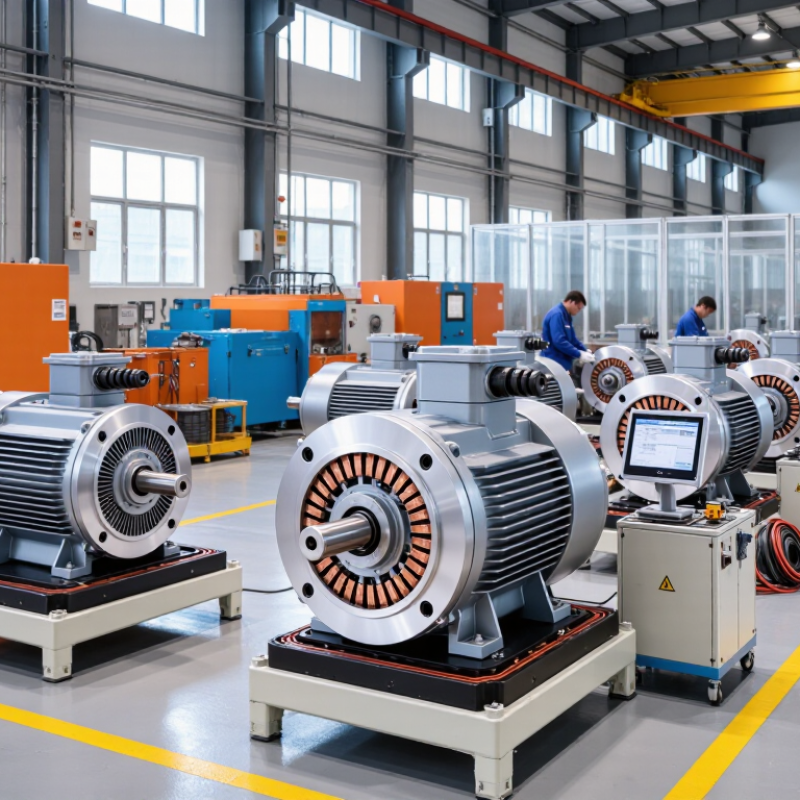
Choosing the best Industrial DC Motor manufacturer in China requires more than comparing prices and catalogue images. Motor performance depends on torque stability, brush life, thermal design, speed control, and after-sales support. A factory floor tells an important story: copper windings, balanced armatures, insulated terminals, and test benches operating under real load. Small details matter.

The International Energy Agency has reported that electric motor systems consume more than 40% of global electricity. The U.S. Department of Energy also estimates that motor-driven equipment uses about 70% of industrial electricity in American manufacturing. These figures explain why efficiency, reliability, and maintainability deserve serious attention. The right Industrial DC Motor can reduce downtime, but the wrong specification may create heat, noise, and repeated maintenance costs.

Austin Hughes, a respected motor engineering author, described the DC motor as “a versatile machine.” That versatility remains valuable in cranes, conveyors, medical equipment, battery systems, and automated production lines. However, versatility is not universal suitability. A manufacturer should prove its claims through load testing, insulation checks, speed regulation data, and traceable quality records. ISO 9001 certification can support confidence, though certification alone does not guarantee excellent motors.

China offers broad manufacturing capacity and competitive engineering support. Still, buyers should inspect more than export experience. Ask for drawings, duty-cycle data, IP ratings, material specifications, and sample-test results. This evaluation process is not perfect, and some supplier information may remain incomplete. Careful verification is essential. The best manufacturer is the one that combines measurable performance, responsive engineering, stable production, and honest communication.
Best Industrial DC Motor Manufacturer in China?

What Defines the Best Industrial DC Motor Manufacturer in China?

Best Industrial DC Motor Manufacturer in China?

What defines the best industrial DC motor manufacturer in China? It is not the lowest quotation or the largest factory. The IEA reports that electric motor systems consume about half of global electricity. The U.S. Department of Energy estimates motor-driven equipment uses 68% of industrial electricity in the United States. Small efficiency losses become expensive over years.

A capable manufacturer begins with the application. Engineers should review torque curves, starting current, duty cycle, ambient temperature, and braking requirements. They should also explain brush wear, commutation limits, insulation class, and thermal performance in plain language. Ask for test records linked to each motor’s serial number. Useful checks include winding resistance, no-load speed, load efficiency, vibration, and dielectric strength. Compliance with IEC 60034 standards is important, but a certificate alone proves little.

Factory experience matters on the production floor. Look for controlled coil winding, balanced armatures, calibrated test equipment, and traceable incoming materials. Request a sample inspection before mass production. A serious supplier can discuss delivery risks, spare brushes, shaft tolerances, and service response without avoiding difficult questions. A polished brochure is not proof. I would still question unusually high efficiency claims without complete test conditions. The best partner may not be perfect, but it should show evidence, admit limits, and improve its process when field data exposes a weakness.

Key Types and Applications of Industrial DC Motors

Choosing the best industrial DC motor manufacturer in China requires more than comparing catalogue power ratings. Industrial DC motors convert electrical energy into controlled mechanical motion, especially where high starting torque and adjustable speed matter. Brushed permanent-magnet motors suit compact conveyors, pumps, battery vehicles, and light automation. Wound-field motors provide broader control ranges for cranes, hoists, and heavy production lines. Series motors deliver strong starting torque, while shunt and compound designs offer steadier speed. Each type has trade-offs. A perfect choice rarely exists.

In steel processing, printing equipment, elevators, and test benches, DC motors remain valuable because speed and torque can be tuned precisely. Brushed motors need scheduled inspection. Carbon brushes wear against the commutator and create dust. Separately excited motors support demanding control systems, but their drives and field circuits require careful commissioning. Engineers should review load cycles, ambient temperature, duty class, shaft alignment, braking needs, and enclosure protection before approval. Ask for thermal-rise data, insulation tests, vibration results, and traceable quality records. These details reveal more than a polished product sheet. In practice, a small duty-cycle mismatch can cause expensive downtime.

Tips: Select the motor from measured load data, not estimated horsepower. Check peak torque during startup and repeated reversing. Confirm controller compatibility, cooling method, mounting dimensions, and spare-brush access. Request sample test reports and a clear warranty process. If the application is unusual, run a pilot test first. It may feel slower, but it prevents confident mistakes.

Best Industrial DC Motor Manufacturer in China? – Key Types and Applications of Industrial DC Motors

How to read the chart: The bars show representative industrial power ranges for common DC motor types. Permanent-magnet motors are generally used in compact automation and material-handling equipment, while series, shunt, compound, and separately excited motors are selected for applications such as cranes, hoists, conveyors, machine tools, rolling mills, and test benches.

These engineering ranges are indicative rather than universal ratings. Actual motor selection depends on torque, duty cycle, speed control, voltage, load inertia, cooling, and environmental conditions.

How to Evaluate Chinese DC Motor Manufacturers

Best Industrial DC Motor Manufacturer in China?

How to Evaluate Chinese DC Motor Manufacturers

Choosing an industrial DC motor manufacturer requires more than comparing online prices. A reliable evaluation begins with technical evidence. Request motor drawings, torque-speed curves, efficiency data, insulation ratings, and temperature-rise test results. Check whether these documents match the proposed production model. A detailed catalog is useful, but it is not proof.

Visit the factory when possible, or arrange an independent audit. Examine winding equipment, balancing machines, aging-test stations, and final inspection records. Ask how the manufacturer controls magnets, bearings, shafts, and brushes. Batch traceability matters when a motor fails months later. Confirm quality procedures, export experience, warranty terms, spare parts, and response times. Ask for recent customer references in similar working conditions. A polished website proves little. I have seen promising samples hide weak communication and inconsistent documentation.

Tips: Order samples before signing a large contract. Test startup current, continuous load, vibration, noise, and heat after several hours. Compare the sample with the approved drawing. Keep written records of every change. Also, inspect packaging for moisture protection and shaft security. Do not rely only on a low quotation. It may exclude testing, tooling, or after-sales support. One honest limitation should not end the evaluation, but an unexplained result deserves a second test. A careful supplier should welcome technical questions, admit production limits, and provide corrective actions with dates.

Manufacturing Quality, Customization, and Certification Standards

Choosing the best industrial DC motor manufacturer in China requires more than comparing prices. Manufacturing quality appears in small details, such as balanced rotors, clean commutators, and evenly wound copper coils. Experienced factories inspect insulation thickness, shaft runout, bearing noise, and temperature rise. These checks matter when a motor runs continuously beside dust, vibration, or changing loads.

Customization should begin with real operating data. A reliable engineering team reviews voltage, torque, speed, duty cycle, mounting dimensions, and ambient temperature. It may adjust the shaft length, gear ratio, winding design, connector, or protection rating. Trial samples should run under measured loads, not only on an empty test bench. That difference is easy to miss. It can also become expensive later.

Certification supports trust, but paperwork alone cannot prove performance. Look for documented quality systems, material traceability, calibrated test equipment, and inspection records linked to each production batch. Standards such as ISO 9001 and IEC 60034 can guide evaluation, while applicable CE or RoHS requirements may support market access. Ask for test reports rather than attractive certificates. No factory is perfect. Even a capable manufacturer may discover occasional commutator wear or inconsistent brush pressure during testing. The important question is how quickly the team identifies the cause, corrects the process, and records the lesson. Regular audits, sample validation, and honest communication reveal more than a polished catalog.

Selecting the Right Manufacturer for Your Industrial Needs

Choosing the best industrial DC motor manufacturer starts with your operating conditions, not a catalog ranking. Define voltage, torque, duty cycle, ambient temperature, enclosure rating, and maintenance access. The U.S. Department of Energy reports that motor-driven equipment consumes about 69% of industrial electricity in the United States. Small efficiency losses can therefore become expensive over long production cycles.

Ask each manufacturer for measured performance data, not general claims. Request efficiency curves, thermal-rise results, brush-life estimates, bearing specifications, and load-test records. The International Energy Agency has reported that electric motor systems consume roughly 53% of global electricity. This makes efficiency, cooling design, and service support practical purchasing factors. A capable supplier should also explain compliance with relevant IEC 60034 requirements and provide traceable test documentation.

Inspect the factory when possible. Watch how windings are insulated, balanced, tested, and stored. Ask whether spare parts remain available after production changes. Lead time matters too. A low purchase price may hide costly downtime or difficult repairs. My own selection checklist would still be incomplete without reviewing vibration data under real loads. Laboratory results can look excellent. The installed motor may face dust, frequent starts, or unexpected shock. Choose a manufacturer willing to discuss those uncomfortable details, correct design weaknesses, and support commissioning after delivery. Reliability is demonstrated over months, not promised in one quotation.

Best Industrial DC Motor Manufacturer in China? - Selecting the Right Manufacturer for Your Industrial Needs

Selection Dimension What to Evaluate Practical Industrial Benchmark Recommended Verification Evidence
Motor Type Confirm whether the application requires a brushed DC motor, brushless DC motor, permanent-magnet motor, or separately excited motor. BLDC motors are generally preferred where low maintenance and long operating life are priorities; brushed motors may be suitable for simpler or cost-sensitive applications. Motor construction drawings, commutation method, application references, and written service-life assumptions.
Rated Voltage Check compatibility with the available DC power supply, battery system, controller, and voltage tolerance. Common industrial DC ratings include 12 V, 24 V, 48 V, 90 V, 180 V, and 240 V, but the correct value depends on the system design. Rated voltage, allowable voltage range, wiring diagram, controller compatibility statement, and nameplate sample.
Rated Power and Torque Compare continuous power, continuous torque, peak torque, acceleration requirements, and load inertia. The motor should be selected using continuous and peak load calculations rather than power alone. Starting torque may be several times the rated torque depending on the motor and controller. Torque-speed curves, load calculations, acceleration test results, and continuous-duty thermal data.
Speed Range Evaluate rated speed, maximum safe speed, minimum controllable speed, and speed regulation under changing loads. A suitable supplier should provide a complete torque-speed curve and define the maximum mechanical speed for each winding configuration. Dynamometer test report, speed regulation data, overspeed limit, and controller operating range.
Duty Cycle Match the motor to the operating profile, including continuous running, frequent starts, reversing, braking, and intermittent loading. IEC 60034-1 defines duty types such as S1 continuous duty, S2 short-time duty, and S3 intermittent periodic duty. The selected motor must be rated for the actual duty cycle. Duty-cycle calculation, thermal model, IEC 60034-1 test documentation, and operating-profile confirmation.
Efficiency Assess electrical efficiency, mechanical losses, controller losses, and energy consumption over the complete working range. Efficiency varies significantly with speed, torque, motor size, winding design, and operating point. A complete efficiency map is more useful than a single peak-efficiency figure. Efficiency map, input-output test data, test conditions, temperature values, and measurement equipment details.
Protection Rating Consider dust, water, oil mist, washdown conditions, and the installation environment. IP ratings are defined by IEC 60529. IP54 provides protection against harmful dust deposits and water splashing; higher ratings may be required for outdoor or washdown applications. IP test report, enclosure design, shaft-seal specification, connector rating, and environmental test conditions.
Insulation and Thermal Class Review winding insulation, maximum temperature rise, ambient temperature, altitude, and cooling method. Industrial motors commonly use insulation systems such as Class F or Class H. The permitted temperature rise must be evaluated together with the actual ambient conditions. Insulation-class declaration, thermal test report, winding resistance data, cooling description, and derating curves.
Control Compatibility Verify compatibility with PWM drives, servo drives, regenerative braking, encoders, Hall sensors, and feedback systems. The motor, controller, feedback device, and braking system should be specified as one integrated motion-control system. Electrical interface specifications, Hall or encoder pinout, controller requirements, EMC test data, and system test records.
Mechanical Configuration Check mounting dimensions, shaft diameter, keyway, flange, bearings, radial load, axial load, and allowable overhung load. Dimensional interchangeability should be verified against the applicable IEC or NEMA mounting standard where relevant to the installation. Dimensioned drawings, 3D CAD files, bearing specifications, shaft-load limits, and mounting tolerance data.
Noise and Vibration Evaluate acoustic noise, mechanical vibration, commutation noise, balancing quality, and resonance risk. Noise and vibration should be measured under defined speed and load conditions. ISO 10816 or ISO 20816 may be relevant for evaluating machine vibration. Noise spectrum, vibration test report, balancing grade, test-fixture description, and acceptance limits.
Quality Management Review process control for winding, magnet assembly, balancing, bearing installation, final testing, and traceability. An ISO 9001-certified quality management system can support consistent processes, but certification alone does not replace product-specific testing. Valid quality certificate, process-control plan, inspection records, calibration certificates, and lot traceability procedure.
Compliance Documentation Confirm the standards and regulatory documents required in the destination market and end-use sector. Depending on the application and market, relevant documentation may include IEC 60034 test data, CE-related technical files, EMC information, RoHS declarations, and REACH statements. Declaration documents, technical file index, material declarations, EMC test reports, and applicable standard list.
Prototype Capability Assess the ability to produce samples, modify windings, adapt shafts, integrate sensors, and validate the complete assembly. A capable manufacturer should define sample lead time, engineering-change procedures, prototype test scope, and approval milestones before mass production. Prototype schedule, sample test plan, engineering-change form, sample approval report, and design-review records.
Production Capacity Evaluate available manufacturing capacity, bottlenecks, production scalability, and capacity during peak demand. Capacity should be demonstrated with realistic monthly output, equipment availability, staffing plans, and confirmed lead times rather than general production claims. Capacity statement, production plan, equipment list, factory audit results, and historical on-time-delivery data.
Reliability and Testing Review endurance testing, thermal cycling, load testing, insulation testing, vibration testing, and final inspection procedures. Testing should reflect the actual application profile, including starts, stops, reversing, temperature, load, and expected operating hours. Reliability test plan, endurance report, hipot and insulation-resistance records, final inspection checklist, and corrective-action history.
Warranty and Technical Support Compare warranty duration, response time, spare-parts support, troubleshooting resources, and engineering communication. A clear written warranty should define coverage, exclusions, operating conditions, claim procedures, and expected response times. Warranty terms, service-level agreement, troubleshooting guide, spare-parts list, and escalation contacts.
Total Cost of Ownership Calculate purchase price together with energy consumption, maintenance, downtime, replacement parts, shipping, and integration costs. The lowest unit price is not necessarily the lowest lifecycle cost. Efficiency, service life, availability, and maintenance requirements should be included in the comparison. Five-year cost model, energy assumptions, maintenance schedule, spare-parts pricing, failure-rate data, and logistics quotation.
Supplier Evaluation Method Use a weighted scorecard that reflects the importance of performance, quality, compliance, delivery, service, and cost to the application. A practical evaluation can assign higher weighting to safety, reliability, technical fit, and compliance than to initial purchase price. Completed supplier questionnaire, weighted comparison matrix, technical review minutes, sample results, and approved-vendor checklist.

FAQS

What should I consider when choosing an industrial DC motor?

Start with measured load data, not estimated horsepower. Check starting torque, continuous torque, speed range, duty cycle, and reversing frequency. Review temperature, dust, vibration, mounting space, and braking needs. A perfect choice rarely exists.

Which DC motor type suits high starting torque applications?

Series motors provide strong starting torque for cranes, hoists, and heavy equipment. Shunt and compound motors usually offer steadier speed. Permanent-magnet motors fit compact conveyors, pumps, and light automation. The application decides.

Why are motor drawings and test reports important?

Drawings confirm shaft size, mounting holes, and overall dimensions. Test reports can show efficiency, insulation performance, vibration, noise, and temperature rise. A polished catalog is not proof. Details matter more.

How can I evaluate a manufacturer before placing a large order?

Request samples, technical drawings, torque-speed curves, and recent test records. Visit the factory or arrange an independent audit when possible. Inspect winding equipment, balancing machines, aging stations, and final inspection areas. Ask difficult questions.

What should I test on a sample motor?

Test startup current, continuous load, vibration, noise, and heat after several operating hours. Compare the sample with the approved drawing. Check shaft alignment and repeated reversing. Empty bench tests can mislead.

How important are brushes and commutators in brushed motors?

Carbon brushes wear against the commutator and create dust. Scheduled inspection helps prevent poor contact and unexpected downtime. Keep spare-brush access practical. Small wear can become expensive.

What customization details should engineers provide?

Provide voltage, torque, speed, duty cycle, mounting dimensions, shaft requirements, and ambient temperature. The design may require a different winding, connector, shaft length, or protection rating. Real operating data is essential.

Do certificates alone prove motor quality?

No. Certificates support evaluation but cannot replace performance evidence. Request traceable material records, calibrated equipment data, insulation tests, and batch inspection reports. A capable factory can still have occasional defects. Its response matters.

What warranty and after-sales details should be confirmed?

Confirm warranty coverage, response times, spare parts, corrective actions, and documentation procedures. Ask how failures are analyzed months after delivery. Packaging should protect against moisture and shaft movement. Cheap support is not real support.

Conclusion

Choosing the best Industrial DC Motor manufacturer in China requires more than comparing prices. A reliable manufacturer should demonstrate strong engineering capabilities, consistent production quality, advanced testing procedures, and a clear understanding of industrial operating conditions. Industrial DC motors are used in applications such as conveyors, lifting equipment, automation systems, machine tools, transportation systems, and other demanding environments. Since different projects may require brushed or brushless designs, varied torque levels, speed ranges, protection ratings, and control methods, manufacturers should be able to provide suitable technical solutions.

When evaluating Chinese manufacturers, buyers should review production capacity, quality management systems, customization services, delivery reliability, after-sales support, and relevant certifications. Attention should also be given to materials, winding quality, thermal performance, durability, and testing documentation. The right manufacturer should communicate clearly, support product development, and provide motors that match the application’s voltage, load, duty cycle, installation space, and environmental requirements. A careful comparison of technical expertise, manufacturing standards, certification compliance, and long-term service can help industrial buyers select a dependable partner.

Ethan

Ethan

Ethan is a seasoned marketing professional with a deep expertise in our company's innovative product line. With a passion for sharing knowledge and insights, he takes the lead in regularly updating our corporate blog, where he explores industry trends, product features, and effective marketing......