What Is the Best Programmable Servo Motor in 2026?

Time:2026-10-14 Author:Sophia
0%

Choosing the best Programmable Servo Motor in 2026 requires more than comparing speed ratings. Real performance depends on control accuracy, torque stability, software support, and long-term reliability. A motor that looks powerful on paper may overheat during repeated movements or lose position under sudden loads.

This guide examines leading servo motors through practical engineering criteria. We consider feedback resolution, programmable motion profiles, communication protocols, noise, heat management, and installation complexity. We also look at everyday details, such as whether the motor maintains a steady position after thousands of cycles. That matters in robotics, CNC equipment, camera systems, and automated production lines.

No single model fits every project. A compact servo may suit a lightweight robotic joint, while an industrial unit may need stronger bearings and continuous torque. Pricing can also mislead. A cheaper motor may require a costly controller, custom cables, or difficult tuning. Our comparisons combine manufacturer specifications with realistic use cases and technical judgment. Still, some conclusions remain imperfect because testing conditions differ between laboratories, workshops, and production floors. That limitation deserves attention.

You need measurable evidence.

The sections ahead will compare programming flexibility, response speed, precision, durability, compatibility, and total ownership cost. We will identify which Programmable Servo Motor offers the best balance for different users in 2026. The final choice should reflect your workload, operating environment, maintenance skills, and future expansion plans.
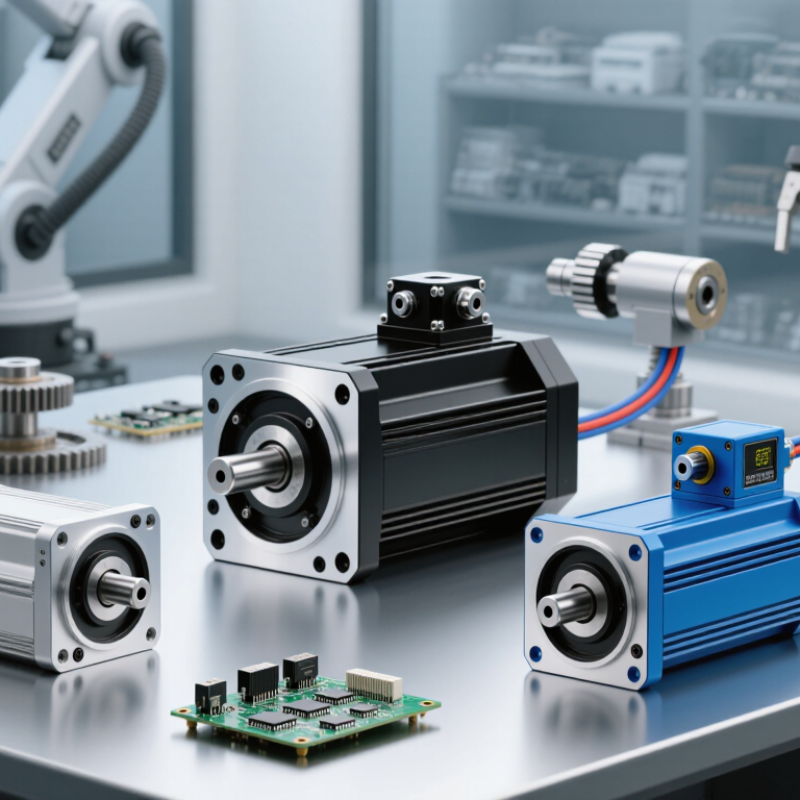
What Is the Best Programmable Servo Motor in 2026?

Defining Programmable Servo Motors and Their Core Functions

What Is the Best Programmable Servo Motor in 2026?

A programmable servo motor combines a motor, feedback device, drive, and control software. It does more than spin a shaft. It measures position, speed, and torque, then corrects movement within a programmed control loop. That distinction matters.

During commissioning, an engineer may command a shaft to move 120 degrees, pause for 80 milliseconds, and return smoothly. The controller compares the target with encoder feedback. It then adjusts current to reduce error, vibration, or overshoot. Some systems also support electronic gearing, cam profiles, torque limits, and diagnostic alarms. The word “programmable” is sometimes used too loosely. A motor with only preset speed settings is not automatically a programmable servo system.

The International Federation of Robotics reported 541,302 industrial robots installed worldwide in 2023. This growing automation base increases demand for accurate, networked motion control. Industry research from MarketsandMarkets also places the global motion control market on a steady growth path through this decade, driven by robotics, packaging, and electronics production.

These figures do not identify one universally best motor. Application fit matters more. A compact actuator may need fast positioning and low inertia, while a machine axis may require continuous torque and thermal stability. Cost is only part of the decision. Cable routing, encoder resolution, tuning software, duty cycle, and service access can decide performance. Not always the headline specification. Testing under real load remains essential, because laboratory accuracy can change sharply after heat, backlash, or vibration enters the machine.

Key Performance Factors for Choosing a Servo Motor in 2026

What Is the Best Programmable Servo Motor in 2026?

Choosing the best programmable servo motor starts with the machine’s real workload, not its advertising claims. Measure peak torque, continuous torque, acceleration, and duty cycle under actual conditions. A motor lifting a 12-kilogram arm needs more than a matching torque number. Leave a practical safety margin for friction, shock, and temperature changes. Too much reserve can also reduce efficiency and increase cost.

Control quality matters just as much. Look for high encoder resolution, stable position feedback, and low backlash in the complete drive system. Communication options should match your controller and future maintenance plans. Fast network updates are useful, but only when the software remains clear and dependable. Test motion at slow speed, sudden stops, and repeated reversals. Small errors appear there.

Thermal performance is often overlooked. Check housing temperature after a long cycle, not after five minutes. A servo can meet its rated output and still overheat in a crowded cabinet. Environmental ratings, cable flexibility, brake response, and replacement access also affect reliability. I would not select a motor from a specification sheet alone. That assumption can fail. A short workshop trial may reveal vibration, noise, or tuning problems that laboratory data misses. Keep records of load, temperature, position error, and maintenance time. The most suitable programmable servo is the one that performs consistently in your machine, with settings technicians can understand and adjust safely.

What Is the Best Programmable Servo Motor in 2026? - Key Performance Factors for Choosing a Servo Motor in 2026

Performance Dimension Recommended 2026 Selection Target Typical Practical Range Why It Matters Best Fit
Motor Technology Brushless permanent-magnet AC or DC servo motor Continuous closed-loop operation Brushless designs generally provide lower maintenance, better efficiency, and higher operating life than brushed motors. Automation, robotics, CNC equipment, packaging
Continuous Torque Rated torque at least 25% above the calculated continuous load Approximately 0.05–100 N·m for common industrial servo sizes Adequate continuous torque prevents overheating and loss of position during sustained operation. Conveyors, rotary tables, robotic joints
Peak Torque Peak torque of at least 200% of rated torque for acceleration and short overloads About 150%–300% of continuous rated torque Higher short-term torque supports rapid acceleration, deceleration, and disturbance recovery. High-speed indexing, pick-and-place, cutting machinery
Maximum Speed Select a rated speed at least 15% above the application requirement Approximately 1,000–6,000 rpm; some specialized motors operate above 6,000 rpm Speed headroom accommodates friction, load variation, acceleration profiles, and control margin. Spindles, feeders, high-throughput production lines
Position Feedback Absolute or incremental encoder with closed-loop position, velocity, and current control Incremental: 1,000–20,000 counts/revolution; absolute: 17–24-bit resolution is common Feedback allows the controller to correct position and speed errors in real time. Precision motion, coordinated axes, robotic systems
Positioning Accuracy Choose based on mechanical backlash, encoder resolution, and load compliance—not encoder resolution alone Approximately ±0.01° to ±0.1° for well-tuned systems Overall system accuracy depends on the motor, drive, transmission, structure, and tuning. Semiconductor equipment, inspection, laboratory automation
Control Modes Position, velocity, torque/current, homing, electronic gearing, and camming modes At least 3 closed-loop operating modes Multiple modes allow one motor platform to support different motion profiles and machine functions. Flexible machines and multi-axis systems
Programmability Onboard motion sequences, parameter storage, digital inputs/outputs, and fault handling Point-to-point and profile-based motion; scripting varies by controller Built-in functions can reduce PLC workload and simplify standalone machine modules. Standalone actuators, compact automation modules
Communication Interface Industrial Ethernet or real-time fieldbus when synchronized multi-axis motion is required Ethernet-based control, CAN-based control, pulse/direction, or analog command The interface affects synchronization, diagnostics, wiring, scalability, and controller compatibility. Networked production lines and coordinated axes
Operating Voltage Match the motor and drive to the available DC bus or AC supply 24–80 V DC for low-voltage systems; 200–480 V AC class for industrial systems Voltage compatibility affects achievable speed, torque, wiring, safety, and drive selection. Mobile equipment, factory automation, heavy machinery
Environmental Protection Use an enclosure rating appropriate to dust, moisture, washdown, and contaminants IP54 for general machinery; IP65–IP67 for demanding environments A suitable enclosure reduces contamination-related failures and improves service life. Food processing, outdoor equipment, dusty factories
Thermal Management Verify continuous torque at the actual ambient temperature and mounting orientation Typical rated ambient range: 0–40°C; derating may apply above this Heat is a major limitation on continuous torque, insulation life, and reliability. High-duty-cycle and enclosed machinery
Tuning and Commissioning Automatic gain tuning with manual adjustment of position, velocity, and current loops Auto-tuning plus software monitoring and oscilloscope functions Effective tuning reduces vibration, settling time, overshoot, and audible noise. Precision equipment and rapidly changing loads
Safety Functions Safe torque off, overcurrent protection, overtemperature protection, and encoder fault detection Drive-level protective functions; safety capability depends on the complete system Integrated protection helps prevent uncontrolled motion and reduces equipment damage. Collaborative machinery, production cells, material handling
Regenerative Braking Drive with braking resistor or regenerative energy-management capability Required when frequent deceleration returns significant energy to the DC bus Proper energy handling prevents DC-bus overvoltage and improves dynamic performance. Vertical axes, unwinders, high-inertia loads
Lifecycle Value Evaluate energy use, maintenance, software support, spare parts, and integration time Total cost of ownership is more meaningful than purchase price alone A slightly higher initial cost may be justified by lower downtime and easier commissioning. Long-life industrial installations
Selection principle: The best programmable servo motor is the one that meets the required torque-speed duty cycle, feedback accuracy, communication needs, environmental conditions, safety requirements, and total cost of ownership with sufficient engineering margin.

Comparing Leading Programmable Servo Motor Types and Applications

The best programmable servo motor in 2026 depends on motion demands, not marketing claims. AC brushless servos suit robots, CNC equipment, and packaging lines requiring high torque and continuous duty. DC servos remain useful in compact mechanisms with moderate loads. Linear servos remove rotary-to-linear conversion, improving positioning in pick-and-place systems. Integrated servo motors simplify wiring, but their enclosed electronics can complicate heat management.

The International Federation of Robotics reported 541,302 industrial robot installations in 2023, with more than 4.28 million robots operating worldwide. That installed base increases demand for accurate, networked motion control. A 2024 MarketsandMarkets forecast places the global servo motors and drives market on a high-single-digit growth path through 2029. Data helps, but application details matter more. A packaging axis may need rapid acceleration every 0.4 seconds. A CNC axis needs smoother interpolation and thermal stability. A warehouse vehicle needs efficient torque at low speed.

Feedback resolution, peak torque, duty cycle, and communication protocol deserve careful testing. So does the motor’s behavior after two hours of heat buildup. Field commissioning often reveals a weakness: a motor can meet its speed rating yet miss position under changing loads. The “best” choice is sometimes the quieter, cooler unit with lower peak output. That feels counterintuitive. It may also reduce maintenance. Engineers should validate the complete motor, drive, encoder, and gearbox combination, rather than judging the motor alone.

How to Evaluate Precision, Control, Compatibility, and Reliability

What Is the Best Programmable Servo Motor in 2026?

The best programmable servo motor depends on the motion task, not its advertised speed. Precision should be measured through repeatability, positioning error, and response under changing loads. Test the motor at slow, medium, and rapid movements. A shaft that stops accurately without shaking is more valuable than a higher peak speed. Control quality also matters. Look for adjustable acceleration, current limits, feedback resolution, and stable communication with the controller. Real machines face vibration, heat, and uneven resistance. Laboratory results can look better than workshop performance.

Tips: Record ten repeated movements at several loads. Compare the average error and the worst result. Check whether software settings remain stable after power cycles. Read technical documents, test reports, and service conditions carefully. Do not trust one impressive specification.

Compatibility is often overlooked. Confirm voltage, connector type, control protocol, mounting dimensions, and programming support before purchasing. A powerful motor becomes difficult to use when its feedback system cannot communicate with existing equipment. Reliability requires more than a long rated life. Examine thermal protection, bearing quality, enclosure design, cable strain relief, and replacement-part access. Independent testing is useful, but it may not match your environment exactly. That limitation deserves attention. In practice, the “best” choice may be slightly slower, easier to configure, and more predictable during continuous operation. Perfect performance is unlikely, so document compromises before installation.

Selecting the Best Programmable Servo Motor for Specific Projects

Selecting the best programmable servo motor depends on the project, not on impressive specifications alone.

Start with the required torque, speed, and movement range. A small robotic gripper may need precise low-speed control, while a camera slider may require quiet, steady rotation. Measure the actual load, including gears, arms, and sudden starts. Add a reasonable safety margin.

Feedback quality matters when positioning must remain accurate.

Encoders can detect shaft movement and correct small errors during operation. Check the motor’s communication interface, programming tools, voltage range, and control resolution. A motor that supports simple position commands can reduce development time.

For dusty workshops or warm enclosures, inspect the rated protection and operating temperature. These details often matter more than peak speed.

I once selected a motor with excessive torque for a compact mechanism. It worked, but the gearbox added weight, noise, and unnecessary cost. That choice needed more reflection. Test the motor with the real mechanical assembly, not only on a workbench. Watch for vibration near target positions. Record current draw during acceleration and repeated cycles. Confirm that the controller can handle faults, stalled movement, and power loss. A reliable selection balances precision, available space, maintenance needs, and the operator’s programming experience. Small prototypes reveal problems early.

FAQS

What should I measure before choosing a programmable servo motor in 2026?

Measure continuous torque, peak torque, acceleration, speed, and duty cycle. Test the real load, not an ideal estimate. A 12-kilogram arm may need extra torque during sudden starts. Leave room for friction and temperature changes.

Is the motor with the highest speed always the best choice?

No. A quieter, cooler motor may perform better during long operation. Higher speed can create vibration, heat, and tuning problems. That feels counterintuitive. Check accuracy under real loads.

How can I test servo motor precision?

Record ten repeated movements at slow, medium, and rapid speeds. Use several load levels. Compare average position error and the worst result. Watch the shaft during stops and reversals. Small shaking matters.

What feedback features are important for accurate motion?

Choose suitable encoder resolution, stable position feedback, and low backlash. Test feedback during changing loads. High resolution alone cannot fix poor mechanical alignment. This assumption often fails.

How should thermal performance be evaluated?

Run the motor through a complete working cycle for at least two hours. Measure housing temperature after extended operation. A crowded cabinet may trap heat. Five minutes proves very little.

Which motor type suits different machine applications?

AC brushless motors suit robots, CNC equipment, and continuous-duty packaging systems. DC servos can fit compact mechanisms with moderate loads. Linear servos suit direct linear positioning. Integrated units reduce wiring, but enclosed electronics may retain heat.

What compatibility details should I confirm before purchasing?

Confirm voltage, connectors, mounting dimensions, control protocol, and programming support. Check communication with the existing controller. A powerful motor is unhelpful when its feedback cannot communicate. Replacement access matters too.

How can I judge reliability beyond the rated service life?

Inspect thermal protection, bearings, enclosure design, cable flexibility, and strain relief. Test repeated reversals, sudden stops, and uneven resistance. Record temperature, position error, vibration, and maintenance time. Perfect reliability is unlikely.

Should I select the motor from its specification sheet alone?

No. A short workshop trial may reveal noise, vibration, or unstable tuning. Test the complete motor, drive, encoder, and gearbox together. Laboratory results may not match your machine. Document compromises before installation.

Conclusion

Choosing the best Programmable Servo Motor in 2026 requires more than comparing speed or torque. These motors combine precise movement, adjustable control settings, feedback systems, and programmable operation to support demanding automation tasks. The most important evaluation factors include positioning accuracy, response time, torque capacity, operating range, energy efficiency, communication compatibility, software support, and long-term reliability. A suitable motor should also match the mechanical load, motion profile, environmental conditions, and available control platform of the project.

Different servo motor types are suited to different applications, from compact robotic mechanisms and laboratory equipment to production machinery and precision positioning systems. To make an informed choice, users should compare control flexibility, feedback resolution, installation requirements, maintenance needs, and overall lifecycle value. The ideal Programmable Servo Motor is not necessarily the most powerful option, but the one that delivers stable performance, accurate control, dependable integration, and sufficient capacity for the specific project.

Sophia

Sophia

Sophia is a dedicated marketing professional with an exceptional depth of knowledge about her company's products and services. With a keen understanding of market trends and customer needs, she crafts insightful blog posts that not only inform but also engage readers, enriching the company’s online......