7 Electric Machine Buying Tips for Global Buyers

Time:2026-09-24 Author:Aria
0%

Buying an Electric Machine for international use is not a simple catalogue decision. It affects production speed, energy costs, maintenance planning, and long-term reliability. A motor that performs well in one factory may struggle in another. Ambient heat, dust, voltage variation, duty cycles, and local service access can change the result.

Dr. Thomas A. Lipo, a respected motor-drive researcher, says, “The machine must be designed for the system, not considered in isolation.” That principle guides this practical buying overview. The following seven tips examine efficiency ratings, torque requirements, insulation, cooling, controls, documentation, and after-sales support. Each factor deserves evidence, not attractive promises.

Small details matter.

A buyer should request test reports, operating curves, material specifications, warranty terms, and references from comparable installations. Check the nameplate carefully. Confirm frequency, enclosure protection, starting method, and expected load profile before comparing prices. A lower purchase price can hide higher energy consumption or difficult repairs. It happens more often than many teams expect.

Still, no checklist removes every uncertainty. Supplier data may be incomplete, and laboratory performance may differ from factory conditions. Buyers should challenge unclear claims and record their assumptions. A site survey can reveal blocked airflow, unstable power, or excessive vibration before the order is placed. These seven Electric Machine buying tips are designed to support careful decisions, not replace engineering judgment. Reliability is built through verification, transparent communication, and realistic expectations.
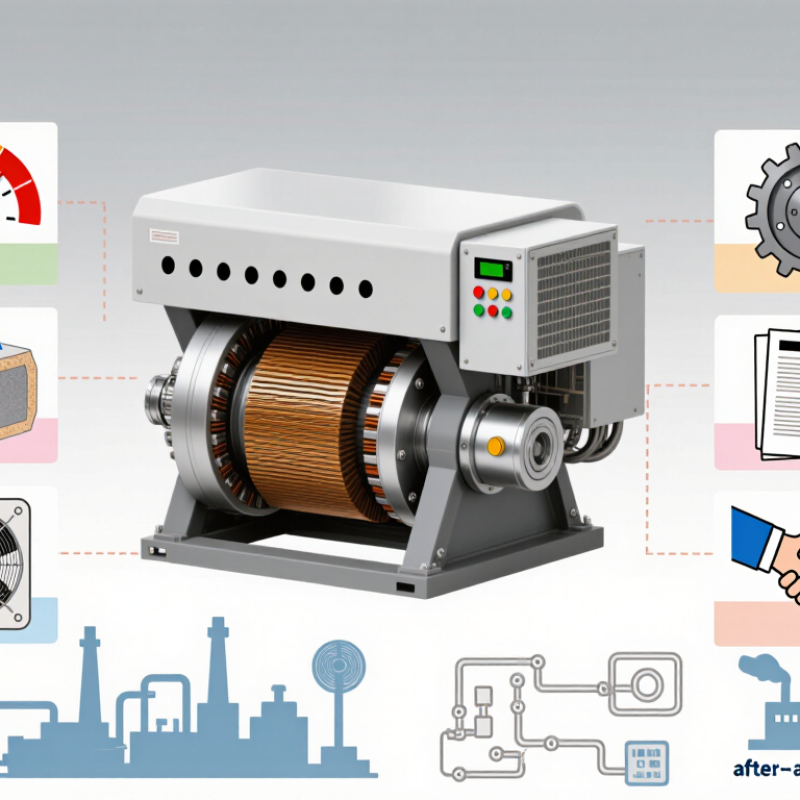
7 Electric Machine Buying Tips for Global Buyers

Define Duty, Output and Grid Needs: 50/60 Hz, Voltage and IEC S1 Ratings

When buying an electric machine globally, define the duty before comparing prices. Duty describes how long and how hard the machine operates. IEC S1 means continuous operation at a constant load until thermal equilibrium is reached. It suits equipment running steadily for long periods, such as pumps or conveyors.

Check the required output in kilowatts, torque, and speed. A machine rated for the correct power may still fail if starting torque is too low. Record the driven load, acceleration time, ambient temperature, altitude, and enclosure requirements. Small details matter. A dusty workshop can change the cooling decision.

Grid compatibility deserves equal attention. Confirm 50 or 60 Hz, phase arrangement, voltage, frequency tolerance, and available fault level. Frequency affects speed, while voltage affects current and insulation stress. A 60 Hz machine may run faster than expected on a 50 Hz system, unless the design permits both frequencies. Read the nameplate carefully. Do not rely only on a sales quotation.

Ask for routine test records, efficiency data, temperature-rise limits, and clear IEC duty declarations. These documents make technical comparisons more reliable across countries. One practical mistake is treating S1 as a guarantee for every operating condition. It is not. Overloads, frequent starts, poor ventilation, and unstable voltage can still reduce service life. Recheck the real operating pattern before approval.

7 Electric Machine Buying Tips for Global Buyers: Define Duty, Output and Grid Needs

Common industrial supply systems include 230 V and 400–415 V at 50 Hz, plus 480 V and 575 V at 60 Hz. Confirm the actual line voltage, frequency, phase configuration and motor connection before selecting equipment. IEC S1 duty means continuous operation at a constant load until thermal equilibrium is reached, so the machine should be sized for the required continuous output rather than short-term peak power.

Compare IE3–IE5 Efficiency Classes Under IEC 60034-30-1

For global buyers, IE3, IE4, and IE5 are not simple marketing labels. IEC 60034-30-1 classifies motor efficiency under defined operating conditions. IE3 is premium efficiency, IE4 is super-premium, and IE5 represents the highest class covered by the standard. The rating compares motor losses, not your entire installation. This distinction matters. A lightly loaded motor may deliver disappointing savings.

When comparing quotations, request rated efficiency, output, poles, voltage, frequency, and test method. Check alignment with the current IEC 60034-30-1 edition and supporting test requirements. A 75 kW, four-pole motor can show different losses from a two-pole model. Ask for a test report, not only a brochure. Review duty cycle, starts per hour, ambient temperature, altitude, enclosure, and variable-speed operation. These details affect heat, reliability, and energy use.

IE4 or IE5 may reduce lifetime electricity costs, but purchase price, controls, repair access, and spare-part availability change the calculation. Permanent-magnet designs can reach IE5, yet they may require different commissioning practices. Do not assume the highest class always offers the best value. Build a load profile from measured operating hours. Include partial-load performance and drive losses. One weakness remains: published figures can be difficult to compare across suppliers. Ask precise questions. Document every assumption before approval.

Match Torque, Speed and Protection: IP55–IP66 Under IEC 60529

Global buyers should match an electric machine to its real load, not only its rated power. Check the nameplate. Record continuous torque, starting torque, speed range, duty cycle, and supply frequency. A conveyor may need high torque at low speed, while a pump often requires stable speed. Review the torque-speed curve before choosing the motor. A simple horsepower match can still produce overheating, weak starts, or excessive energy use.

The enclosure rating matters in dusty or wet installations. Under IEC 60529, IP55 means protection against harmful dust deposits and water jets from any direction. IP66 provides a dust-tight enclosure and stronger water-jet protection. IP66 is not automatically better for every application. It can increase cost, weight, and cooling challenges. Neither rating confirms resistance to chemicals, salt spray, vibration, or corrosion. Those conditions require separate material and coating checks.

Inspect the installation area carefully. Imagine flour dust near a mixer, or a hose washing a factory floor. Ask how often water reaches the housing, and from which angle. Confirm cable glands, terminal boxes, shaft seals, and mounting surfaces match the selected rating. Do not overlook ambient temperature, altitude, ventilation, and variable-frequency drive settings. In practice, buyers sometimes trust the IP label too much. I have seen a correctly rated motor fail after an unsuitable cable entry was fitted. Measure twice. Then verify the test documentation and maintenance access.

7 Electric Machine Buying Tips for Global Buyers — Match Torque, Speed and Protection: IP55–IP66 Under IEC 60529 Practical selection criteria for comparing low-voltage industrial motors across international applications
No. Buying Dimension What to Match Reference Data or Calculation Applicable Standard / Check Buyer Action
1 Rated Torque Select a motor whose continuous rated torque meets the machine’s continuous load torque, with sufficient allowance for acceleration and temporary overloads. Torque formula: T = 9550 × P ÷ n
Example: an 11 kW motor operating at 1,460 rpm produces approximately 72 N·m.
Check rated torque, breakdown torque, starting torque, and load profile according to the motor datasheet. Compare torque at the actual operating speed, not only the kW rating.
2 Speed and Pole Count Match motor speed to the driven equipment, transmission ratio, and required process speed. Synchronous speed formula: nₛ = 120 × f ÷ p
At 50 Hz: 2-pole ≈ 3,000 rpm; 4-pole ≈ 1,500 rpm; 6-pole ≈ 1,000 rpm.
Actual induction-motor speed is lower because of slip.
Confirm frequency, pole count, rated speed, and allowable speed range for direct-on-line or variable-frequency operation. Specify 50 Hz or 60 Hz and state the required output speed.
3 Voltage and Frequency Ensure the motor nameplate voltage and frequency match the local grid, generator, or variable-frequency drive. Common industrial supplies include 230/400 V at 50 Hz and 460 V at 60 Hz, but regional systems vary.
A 230/400 V motor is typically connected delta at 230 V or star at 400 V, subject to the nameplate.
Verify IEC 60034-1 nameplate information, connection diagram, phase count, and supply tolerance. Provide the installation country and exact supply conditions before ordering.
4 Ingress Protection Choose protection according to dust, water, washdown, humidity, and installation exposure. IP55 First digit 5: dust-protected; second digit 5: protected against water jets.

IP66 First digit 6: dust-tight; second digit 6: protected against powerful water jets.
IEC 60529 defines the IP Code. IP rating does not by itself specify corrosion resistance, chemical compatibility, or explosion protection. Use IP66 for severe dust or frequent powerful washdown when validated for the application.
5 Efficiency and Operating Cost Compare efficiency at the expected load rather than selecting only by rated output. Input power is approximately Pᵢₙ = Pₒᵤₜ ÷ η.
For an 11 kW motor at 90% efficiency, input power is about 12.22 kW before power-factor effects.
Use the efficiency class and test method specified by IEC 60034-30-1 and IEC 60034-2-1. Request efficiency values at 50%, 75%, and 100% load when energy cost is important.
6 Duty, Starting, and Speed Control Match the motor to the operating cycle, start frequency, inertia, acceleration time, and control method. S1 means continuous duty at a constant load until thermal equilibrium.
High-inertia loads may require higher starting torque, reduced-voltage starting, or a variable-frequency drive.
Review duty type under IEC 60034-1 and confirm suitability for direct-on-line, soft-starter, or VFD operation. Supply the load inertia, starts per hour, ramp time, and minimum operating speed.
7 Mechanical Fit and Environment Verify mounting, shaft dimensions, rotation, bearing arrangement, ambient temperature, altitude, and cooling conditions. Common mounting references include foot-mounted and flange-mounted arrangements.
Derating may be required for high ambient temperature, high altitude, restricted ventilation, or frequent low-speed VFD operation.
Check IEC 60034-5 for enclosure protection, IEC 60034-6 for cooling methods, and IEC 60034-7 for mounting arrangements. Confirm frame size, mounting code, shaft height, terminal-box position, and environmental conditions.
Technical note: IP55 and IP66 describe protection against solid foreign objects and water ingress under IEC 60529 testing conditions. They do not guarantee protection against salt spray, corrosive chemicals, condensation, or hazardous atmospheres. For these conditions, specify the required coating system, space heaters, drainage provisions, or hazardous-area certification separately.

Verify Supplier Quality Through IEC 60034 Tests and ISO 9001 Systems

For global buyers, supplier quality should be verified through evidence, not polished brochures. Electric motor systems consume about 46% of global electricity, according to the International Energy Agency. Small efficiency losses can become expensive across thousands of operating hours.

Ask for test records aligned with applicable IEC 60034 requirements. Check efficiency, temperature rise, vibration, insulation resistance, and high-voltage withstand results. Request the motor’s serial number on each report. Compare the measured current with the nameplate data. A factory witness test can reveal unusual noise, unstable readings, or careless wiring. These details matter.

ISO 9001 certification indicates a quality management system, not perfect motors. The ISO Survey 2022 recorded 1,265,216 ISO 9001 certificates worldwide. That number shows broad adoption, but certification alone proves little about daily discipline. Review calibration records, incoming-material controls, nonconformity reports, and corrective actions. Ask how rejected rotors are tracked. Ask again when answers sound vague.

A certificate is not proof alone. I have seen technically complete files with missing dates and unclear acceptance criteria. That is a warning, though not automatic evidence of failure. Buyers should define required IEC 60034 tests, sampling levels, documentation, and retest rules before placing an order. Clear requirements make supplier comparisons fairer and reduce unpleasant surprises after installation.

Calculate Lifecycle Cost: Energy Can Exceed 90% of Motor Ownership Cost

When global buyers compare electric machines, purchase price often gets the attention. Yet energy can exceed 90% of total ownership cost over a motor’s working life. This figure depends on load, operating hours, electricity tariffs, and service conditions. A 30 kW motor running 6,000 hours yearly can consume far more money than its invoice price. Small efficiency differences become visible on monthly utility bills. Measure the load.

Request measured efficiency data at actual load points, not only rated output. A motor rarely works at full capacity all day. Record voltage, current, speed, duty cycle, and annual hours during a representative production week. Then estimate annual energy use with kW × operating hours × electricity rate. Include standby periods and seasonal tariffs. Ask for test standards, tolerance ranges, and laboratory documentation. Independent verification adds confidence when comparing suppliers across countries. Numbers can mislead.

Lifecycle analysis should include installation, controls, cooling, maintenance, downtime, and eventual replacement. Higher efficiency may require a larger initial budget, but payback can be short under heavy continuous use. However, an oversized motor wastes energy at light loads. That mistake is common. Check compatibility with local grids, ambient temperature, enclosure requirements, and service skills. I would also model a pessimistic case using lower utilization and higher tariffs. My earlier estimates often looked too precise. Real factories are less tidy. Keep assumptions visible, update them after six months, and compare actual consumption with the original model.

FAQS

How should I choose an electric motor for a conveyor or pump?

Match the motor to the real load, not just rated power. Check continuous and starting torque, speed range, duty cycle, and supply frequency. A conveyor may need strong torque at low speed. A pump may need stable speed. Review the torque-speed curve; a simple power match can still cause overheating.

What do IP55 and IP66 ratings mean?

Under IEC 60529, IP55 protects against harmful dust deposits and water jets from any direction. IP66 is dust-tight and offers stronger water-jet protection. Neither rating confirms resistance to chemicals, salt spray, vibration, or corrosion.

Is IP66 always the better choice for wet or dusty sites?

Not necessarily. IP66 may add cost and weight, and can make cooling more difficult. Consider the actual exposure, such as flour dust near a mixer or wash water reaching the housing. The label alone is not enough.

Which motor installation details should I verify?

Check cable glands, terminal boxes, shaft seals, and mounting surfaces. Also review ambient temperature, altitude, ventilation, and drive settings. A suitable IP rating can still fail when an unsuitable cable entry is fitted.

What test evidence should I request from a motor supplier?

Request records aligned with applicable IEC 60034 requirements. Check efficiency, temperature rise, vibration, insulation resistance, and high-voltage withstand results. Each report should include the motor’s serial number, and measured current should match nameplate data.

What can a factory witness test reveal?

It can expose unusual noise, unstable readings, or careless wiring. These details may be easy to miss in polished documents. Still, define acceptance criteria before testing; otherwise, results can be hard to judge fairly.

Does ISO 9001 certification guarantee a high-quality motor?

No. It indicates a quality management system, not perfect products or consistent daily discipline. Review calibration records, incoming-material controls, nonconformity reports, and corrective actions. Ask how rejected rotors are tracked.

What should I check before accepting supplier test documents?

Confirm dates, acceptance criteria, sampling levels, and retest rules. Missing dates or vague criteria deserve follow-up, though they do not automatically prove a motor is defective. Clear requirements help prevent surprises after installation.

Conclusion

Choosing an Electric Machine requires more than comparing rated power or purchase price. Start by defining the machine’s duty, required output and site electrical supply, including frequency, voltage and whether continuous-duty S1 operation is needed. Compare IE3, IE4 and IE5 efficiency classes under IEC 60034-30-1, then match torque and speed to the application. Check that the enclosure’s IP rating, from IP55 to IP66 under IEC 60529, suits the expected exposure to dust and water.

Before purchasing, review supplier quality processes and relevant IEC 60034 test documentation, along with evidence of an established ISO 9001 quality management system. Finally, assess total lifecycle cost rather than focusing only on the initial price: electricity can account for more than 90% of a motor’s ownership cost. A careful evaluation of operating conditions, efficiency, protection, quality and energy use can help buyers select a machine that performs reliably and economically over time.

Aria

Aria

Aria is a dedicated marketing professional with a deep passion for innovative strategies and a keen understanding of our company's product offerings. With a wealth of experience in the industry, Aria excels at crafting engaging content that highlights the unique features and benefits of our......